When Tanzania went to the polls on October 29 2025, many hoped for a vote that could restore public confidence after years of political tension. Instead, the country witnessed an election defined by repression, intimidation, irregularities, violence plus a coordinated effort to silence dissent. At VOCAL Africa, we are deeply concerned about the scale of human rights violations reported across the country. The patterns documented by observers, rights groups plus independent journalists point to a process that cannot be described as free or fair.
In this blog, we highlight what happened during the elections, who was affected, what the numbers reveal plus why accountability matters.
A Restricted Race Before Tanzanians Even Voted
Tanzania entered the election season under heavy restrictions. Major opposition figures were blocked from running. Tundu Lissu remained in prison on treason charges. Another opposition candidate from ACT-Wazalendo was disqualified. Public rallies were violently dispersed. Opposition offices were raided. Scores of activists were detained before the campaigns even heated up.
Amnesty International reported a climate of fear. It documented cases of abductions, disappearances plus politically motivated charges used to keep opposition voices off the ballot. By the time voting day arrived, the political environment was already shaped by intimidation rather than democratic choice
Election Day: Blackouts, Ballot Stuffing plus Broken Trust
On election day, the African Union (AU) Election Observation Mission found multiple violations across the country. Observers flagged ballot stuffing in several stations plus reported that some voters received multiple ballot papers. Opposition party agents were missing from many stations. This absence destroyed the transparency needed for credible vote counting.
A nationwide internet blackout hit during a critical stage of the election. This prevented voters, media, monitors plus civil society from accessing or sharing information. It also limited the ability of observers to track results and closing procedures. AU monitors noted that the blackout created space for irregularities to flourish without scrutiny.
The Southern African Development Community (SADC) mission echoed the same concerns. It stated that many Tanzanians could not freely express their democratic will.
A Violent Aftermath: Protesters Shot, Hundreds Arrested
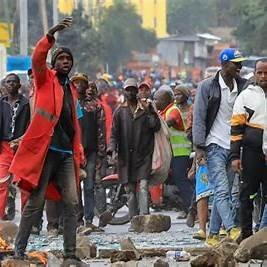
As results began to emerge, protests broke out in Dar es Salaam, Arusha, Mbeya, Mwanza plus other cities. Security forces responded with lethal force.
Amnesty International confirmed that at least two people were killed during election-day protests. Other rights groups placed the number far higher. Some independent sources estimate that there may have been hundreds of killings tied to the post-election crackdown. The International Federation for Human Rights (FIDH) reported as many as thirty deaths on election day alone.
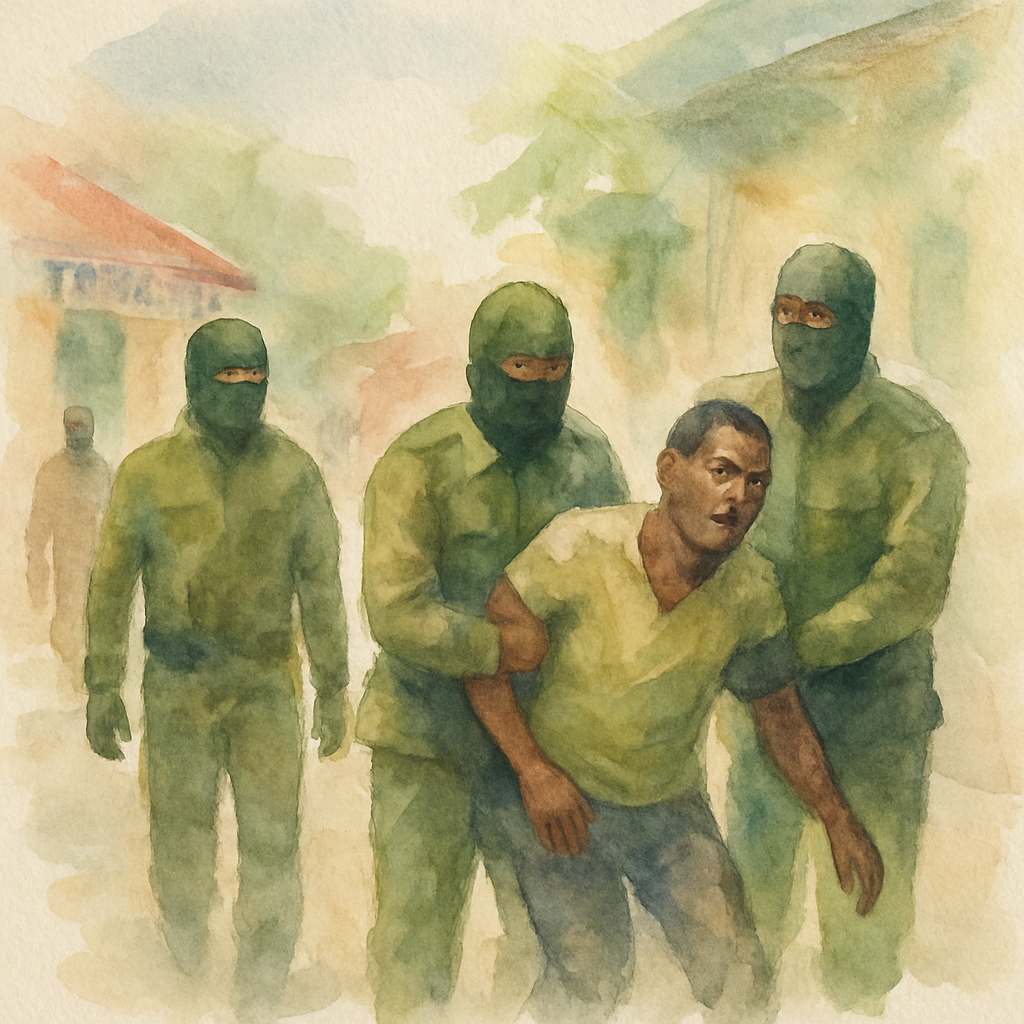
More than two hundred people, including senior CHADEMA officials such as Amani Golugwa, were arrested and charged with treason. Many were violently taken from their homes or from the streets. The widespread use of treason charges suggests an attempt to criminalise political dissent rather than uphold the rule of law.
VOCAL Africa is alarmed by reports of enforced disappearances. Several families have come forward stating that loved ones were taken by unidentified security personnel. Many remain missing.
Observers Deliver a Clear Verdict
The African Union delivered one of its strongest statements in recent years. It declared that the 2025 elections did not comply with AU principles or international standards for democratic elections.
Key concerns listed by the AU include:
Intimidation of political actors
Absence of opposition candidates
Ballot irregularities
Restriction of observers
Media bias in favour of the ruling party
Internet shutdown during critical stages
SADC observers shared the same alarm. They stated that the elections were deeply flawed and that the environment did not permit a genuine contest.
For a region that has struggled with democratic backsliding, these statements are significant.
VOCAL Africa stands with the families of the disappeared, the survivors of violence, the detained opposition members, and every citizen denied the right to choose their leaders.
Documented violations
1. Exclusion of opposition voices
Before voting day there were sustained actions that restricted opposition participation. Several opposition leaders were arrested on politically charged charges. Candidates were disqualified on procedural or opaque grounds. Access to public platforms and the state media was skewed toward the ruling party. The result was a contest that lacked meaningful choice for voters.
2. Restrictive legal environment and criminalisation of dissent
Authorities used broad national security laws to pursue critics. Treason charges were filed against dozens of activists and political figures. Those charges carried heavy penalties and were used to intimidate opponents. The rapid filing of mass charges suggested a strategy of criminalising protest rather than engaging with grievances through democratic channels.
3. Censorship, internet disruption, and information blackouts
During critical phases of the election process there were reported internet disruptions that limited access to information and hindered independent monitoring. Communication shutdowns prevent timely reporting of violations. They also obstruct families trying to locate detained loved ones. The suspension of digital communications is a particularly acute form of repression in an era where citizens rely on mobile networks to document events.
4. Ballot and counting irregularities
Observers reported procedural irregularities at polling stations. Ballot-stuffing and the issuing of multiple ballots were alleged in a number of localities. Political party agents from opposition groups were absent in polling centres where transparency was most needed. The African Union mission described problems with vote count integrity that undermined public confidence.
5. Use of force against protesters
Following the announcement of results protests erupted in several cities. Security forces responded with measures that, according to rights groups, were disproportionate. Verified reports indicate at least two deaths during protests. Numerous injuries were recorded. Field investigations by Amnesty International and other groups documented the use of live ammunition, beatings, and arbitrary arrests.
6. Abductions, enforced disappearances, and targeting of activists
Civil society organisations reported cases of activists being detained without record, taken to undisclosed locations, or not presented to family members. These actions create a climate of fear where people are unable to seek redress. Several journalists and human rights defenders also reported harassment, threats, and physical attacks in the days after the vote.
Sources and the challenge of verification
VOCAL Africa compiled this account from the public findings of the African Union Election Observation Mission, Amnesty International, regional observers, investigative reporting from international outlets, coverage by local media, and documentation by local human rights groups. Where independent verification was limited the diversity of corroborating accounts still points to serious systemic problems.
It is important to note that exact counts of fatalities, arrests, or disappearances differ across sources. The differences often reflect the realities of information suppression, restricted access for independent investigators, or deliberate obstruction of reporting channels. Where possible this post cites numbers that are clearly reported by reputable observers. VOCAL Africa will continue to collect verified testimonies to build a more comprehensive public record.
Human stories behind the numbers
Numbers only capture part of the harm. Behind every arrest or disappearance there is a family in distress. Behind each internet blackout there are journalists unable to publish eyewitness accounts. Behind each ballot irregularity there is a voter whose voice was erased. VOCAL Africa has been contacted by relatives of detained activists who report being denied visitation rights. Others report being given vague information about a loved one’s whereabouts.