
Internet Shutdowns as Collective Punishment—The Digital Siege

Internet shutdowns and throttling have become a standard weapon in the East African government playbook for managing dissent. What started as occasional, crude measures—cutting all internet access during elections—has evolved into sophisticated, targeted digital repression that disconnects citizens from each other, from information, and from the global audience they need to amplify their voices.


00:00
00:00

June 25, 2024. As Kenyan youth mobilized for what would become the largest protests in a generation, internet speeds suddenly crawled to near unusability. Social media platforms intermittently failed. WhatsApp messages wouldn’t send. Live streams froze mid-broadcast. It wasn’t a technical glitch—it was deliberate throttling, a digital siege designed to blind, silence, and isolate protesters.

Internet shutdowns and throttling have become a standard weapon in the East African government playbook for managing dissent. What started as occasional, crude measures—cutting all internet access during elections—has evolved into sophisticated, targeted digital repression that disconnects citizens from each other, from information, and from the global audience they need to amplify their voices.

The Evolution of Digital Disconnection

Full Shutdowns: The blunt instrument. Cut all internet access across a region or country. Uganda did this during the 2021 elections—no internet for five days. The message was clear: we’d rather shut down the economy than allow you to organize or document what we’re doing.

Throttling: More sophisticated and harder to prove. Internet speeds are reduced to the point of unusability without technically being “off.” You can load text slowly, but can’t livestream police violence. You can send messages eventually, but can’t coordinate real-time protest movements. Kenya deployed this during the Finance Bill protests.

Platform-Specific Blocking: Target the tools protesters use most. Block Twitter, Facebook, WhatsApp, or TikTok while leaving other services operational. Tanzania has repeatedly blocked social media platforms during politically sensitive periods, claiming they’re combating “misinformation.”

VPN Blocking: When citizens use VPNs to circumvent shutdowns, governments respond by blocking VPN services too. Some countries have made VPN use illegal, turning a basic digital security tool into criminal activity.

Strategic Timing: Shutdowns and throttling are deployed at critical moments—during protests, on election days, when international attention is focused elsewhere. The goal is maximum disruption with minimum international backlash.

The Stated Justifications (And Why They’re False)

Governments offer predictable excuses for internet shutdowns:

“National Security”: They claim shutdowns prevent terrorists from coordinating. In reality, sophisticated criminal networks have alternative communications. Shutdowns only affect ordinary citizens organizing legitimate protests.

“Preventing Misinformation”: They argue they must stop false information from spreading. But shutdowns don’t stop misinformation—they prevent factual information from emerging. When you can’t livestream police violence, the government controls the narrative entirely.

“Maintaining Public Order”: They suggest internet access enables chaos. The truth is the opposite: documented protests are less violent because participants know they’re being watched. Shutdowns enable state violence by removing witnesses.

“Technical Issues”: Sometimes they simply deny shutdowns are happening, claiming technical problems. But when “technical problems” consistently occur during protests and affect all providers simultaneously, the lie is transparent.

The Real Cost: Beyond Inconvenience

Internet shutdowns aren’t just frustrating—they’re economically devastating, socially destructive, and potentially deadly:

Economic Devastation: Every day of shutdown costs millions in lost business, disrupted commerce, and frozen financial transactions. Kenya’s throttling during June 2024 protests cost the economy an estimated $1.5 million per day. Small businesses that depend on mobile money can’t operate. Remote workers lose income. The digital economy simply stops.

Emergency Services Compromised: Modern emergency response depends on internet connectivity. When networks are shut down, people can’t call ambulances, report fires, or request police help (even legitimate help). During Uganda’s 2021 shutdown, hospitals reported difficulty accessing patient records and coordinating emergency responses.

Isolation of Vulnerable Populations: Shutdowns don’t just affect protesters. They cut off rural communities from telemedicine, students from online education, and families from each other. The collective punishment affects everyone, with the most vulnerable bearing the greatest burden.

Erasure of Evidence: Without livestreaming and real-time documentation, state violence disappears. When police beat protesters during a shutdown, there’s no video evidence. When security forces kill, there are no immediate witnesses beyond those present. Shutdowns create an evidence vacuum that enables impunity.

Mental Health Crisis: For activists and their families, shutdowns create acute anxiety. Is your child at that protest? Are they injured? Have they been arrested? The inability to communicate transforms normal worry into traumatic uncertainty.

Case Study: Uganda’s 5-Day Internet Blackout

Uganda’s 2021 election-period shutdown stands as one of the most severe examples:

  • Complete internet blackout from January 13-18, 2021
  • All mobile data disabled; only selected institutions had access
  • VPN usage criminalized; people arrested for using VPNs
  • International election observers couldn’t coordinate
  • Opposition couldn’t report irregularities
  • Citizens couldn’t access mobile money for basic needs
  • Economic losses estimated at over $9 million
  • Shutdown continued for days AFTER the election, revealing it was always about suppressing dissent, not “election security”

The government’s justification? “Preventing social media from being used to spread lies.” But what really happened was the prevention of citizens from seeing, sharing, and responding to electoral irregularities and police violence.

Case Study: Kenya’s Strategic Throttling

Kenya’s approach during 2024 protests was more sophisticated but equally effective:

  • Internet speeds reduced to 30-40% of normal during key protest days
  • Social media platforms functioned intermittently
  • Livestreaming became nearly impossible, but basic browsing still worked
  • This allowed the government to deny shutdowns were happening
  • Mobile money transactions slowed, disrupting economy
  • Protesters couldn’t coordinate in real-time
  • International media couldn’t receive live footage
  • By the time videos uploaded hours later, the moment had passed

The sophistication made it harder to prove and protest, but the effect was the same: digital isolation during critical mobilization moments.

The Regional Coordination

Internet shutdowns in East Africa aren’t independent decisions—they’re part of a regional learning process:

  • Governments share tactics and technical approaches
  • Telecommunications companies face pressure across borders to comply
  • Regional security frameworks facilitate coordination
  • When one country successfully deploys a shutdown without major backlash, others take note

This creates a race to the bottom where the most repressive practices spread regionally.

VOCAL Africa

VOCAL Africa

Subscribe to Our Newsletter

Keep in touch with our news & offers

Thank you for subscribing to the newsletter.

Oops. Something went wrong. Please try again later.

Also listen on

Enjoy Unlimited Digital Access

Read trusted, award-winning journalism. Just $2 for 6 months.
Already a subscriber?
What to read next...
Blogger’s death sparks protest and police crackdown in Kenya

Blogger’s death sparks protest and police crackdown in Kenya

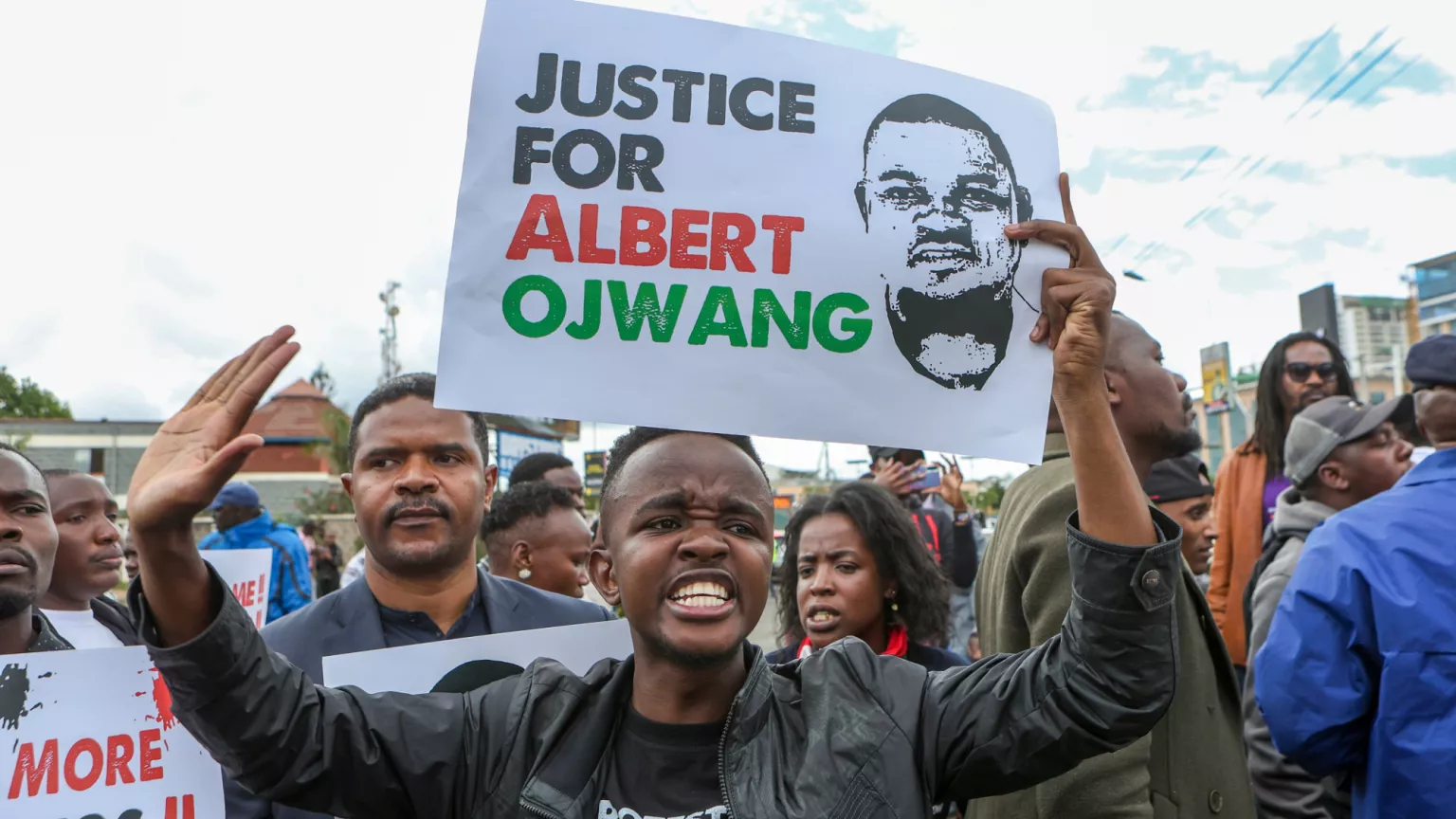
"Justice for Albert": The Blogger Who Died in Custody, and the Fire He Sparked By VOCAL Africa Newsroom | June 11, 2025 Albert Ojwang was more than a blogger. He was a husband, a father to a five-month-old baby, a teacher by profession, and a fearless digital activist who believed in the power of truth. …

‘Enforced disappearances’ send a chill through Kenya’s protests

Since June 2024, Kenya has experienced a concerning surge in enforced disappearances, particularly targeting individuals involved in anti-government protests. The Kenya National Commission on Human Rights (KNCHR) has documented 82 cases of abductions or enforced disappearances between June and December 2024, with 30 individuals still unaccounted for.

Leave a Reply

Your email address will not be published. Required fields are marked *